Article 10. On Stewardship and Justice
by The Rt. Rev. Winfield Mott
Article 10
“We are mindful of our responsibility to be good stewards of God’s creation, to uphold and advocate for justice in our society and to seek relief and empowerment of the poor and needy.”
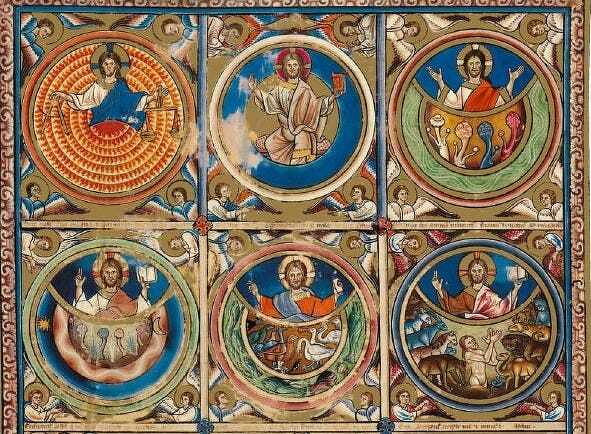
Article 10 is a succinct, almost terse, statement of the basic theological foundation for the enormously important, interdependent, and contemporary issues related to creation, economics, and justice. These issues are often not so much disputed as ignored by orthodox Christians, with the consequence of seriously distorting the Gospel message for our time.
Theology of Creation
The first statement of the Creed echoes the first statement of the Bible, affirming God as Creator. In Genesis 1:26, God gives man dominion over the earth and its and all that dwell therein, which still remains God’s (Psalm 24). Man’s rule can thus be best described as a covenantal monarchy, a governing stewardship according to pre-established standards for the greater good, rather than a personal dictatorship. The heavens and the earth and all that are therein are included in the divine creation, and therefore in the mandate of stewardship. Man is accountable to God, as the owner, for the management of the earth.
This is compatible with Jewish tradition and much Eastern thought. It was, however, counter-cultural in the milieu of the Roman Empire. Over the centuries, Christianity has always fought a battle against a dualistic worldview, which separated the spiritual from the material. This pervasive dualism has been especially prevalent in Western civilization, not infrequently permeating Christian thought as well. This has in turn led to a misinterpretation of “dominion” to mean the exploitation and “conquering” of the material creation, rather than the careful nourishing management of the earth implied in good stewardship.
Article 10 of the Jerusalem Declaration directly and simply refutes this misinterpretation. 1 Peter 2:9 is a key statement; we are to be kings and priests. Our baptism annoints us both to rule as wise stewards of creation and to offer our rule to God as his priests. Since all the earth is sacred, all the baptized Faithful have the holy vocation of sharing in its stewardship and in offering it to the Creator and Owner. To damage the earth or its creatures, including humans, is to desecrate God’s sacred temple of earth, just as St. Paul points out that each human is a temple of God’s (1 Corinthians 3:16-17, 6:19-20) and is to be respected as such. To be indifferent to the current exploitation and consequent suffering of the earth and her creatures is only to move your sin from that of commission to omission.
Implications of our Theology
Yet has orthodox Anglicanism implemented the correct interpretation of stewardship and reflected its central importance in its’ worldview and ethics? Article 10 cannot simply be assented to; it mandates action. And yet, this action demands that we rightly understand stewardship. To limit stewardship—as is often done—to donations or raising funds for needs ecclesial or terrestrial (“so long as I give God his cut, I’m fine”) is a failure to grasp even the basics of Article 10. To accept the Article means accepting the burden of “responsibility to be good stewards” and to “uphold and advocate for justice” and “seek relief and empowerment of the poor and needy.” These are actions, not abstract concepts. Jesus expects such action from us, over a lifetime, as he makes clear in the parable of the sheep and the goats (Matthew 25:31-46).
It is important to remember our ultimate motivation. The two “Great Commandments” to love God and neighbor are incorporated in the Anglican Rite as key entrance elements in the Holy Eucharist, orienting us to the context of love in our liturgy of Sunday and the liturgy of the week which follows, lived in the world. “Relationship with the Creator of all things cannot, by definition, be something exclusive; it is the key to a love that embraces all creatures. ‘Anyone who loves God loves not only his fellow man, but the entire creation as well.”1 It is this which ultimately drives our stewardship of creation, and as part of that, our commitment to justice and to the “relief and empowerment of the poor and needy.”
Those who imagine themselves outside of nature, and see our relationship with the environment as “man versus nature,” are deceived by the false view of the material world. Man is fully part of the natural world, taking his place among the other species. He is designed to live in harmony with those species and his own, in his assigned vocation as steward of the planet and its great variety of inhabitants.
Peace, Justice, and Creation
The sinful greed and avarice of many of our fellow humans, extending even into the excessive consumerism of many Christians, has led to a crisis caused by such bad stewardship. Christians are called to give prophetic witness to change this disobedient and ungodly behavior, so the planet can be restored, and we humans can survive. This stewardship is interdependent. As the late Pope Francis helpfully articulated, “Peace, justice and the preservation of creation are three absolutely interconnected themes, which cannot be separated and treated individually.”2 Therefore, “we are faced not with two separate crises, one environmental and the other social, but rather with one complex crisis…. Strategies for a solution demand an integrated approach to combating poverty, restoring dignity to the excluded, and at the same time, protecting nature.” The interdependence of these crises is affirmed by the phrasing of Article 10, which holds these themes together rather than siloing them into separate articles.
Lift Up Your Hearts
Stewardship begins at the altar: “The Gifts of God for the people of God” (Liturgy of St. John Chrysostom)—the material sacramental gifts embedded in bread and wine—are prototypes of the material creation we will encounter as we leave the altar and enter into the week to come in the world. Wheat and water are joined with human effort to make bread, which is made by the Spirit to be for us the Body of Christ. We, having returned to God the talent he gave us with our investment of effort,3 receive back from God himself. All of creation desires to participate in the perfect,4 and we have been given the responsibility of taking that which lacks reason and aligning it with God’s Wisdom, Christ (1 Corinthians 1:24). Thus, humanity has been charged with a kind of stewardship that does not merely prolong the existence of created things, but shapes them godward. Applying the sacramental love we have received to the challenges and decisions we face is how we exercise good stewardship to nurture the creation entrusted to our care, and the poor dependent on our mercy, along with facilitating the justice of their cause.5
When faced with the overwhelming scope of this crisis, a feeling of helplessness is not surprising. Only a shared, common response—collective action—can make an impact. Yet shared responses are composed of multiple individual decisions to act. The most important thought to remember is expressed in the motto of Mumintroll (a Finnish cartoon character, created by Tove Janson): “The little he could do, he did.”
With this in mind, and with the urgent, crisis-driven imperative to be a good steward—illucidated in the Scriptures, and proclaimed by the Jerusalem Declaration—the following practical steps are suggested as we “uphold and advocate for justice in our society”:
-
Pray for guidance
-
As you receive Christ in the sacramental gifts of the Eucharistic elements, let them motivate you in taking action as a good steward
-
Educate yourself regarding the interrelated damage being done by greedy sinfulness to the planet and to the many living in poverty and without justice
-
Stewardship is exercised in a multitude of ways, some of which are:
- to speak up on behalf of the creation and its suffering inhabitants,
- to be politically active, voting and/or working for candidates who are committed to the wise stewardship of nature, man and beast; to be an intelligent voter, well-informed and not easily duped,
- to seek and support groups and agencies, especially (but not limited to) Christian ones, who you can verify by research are implementing the goals of Christian stewardship, including alleviating poverty,
- to witness to your fellow Anglicans as to the necessity and priority of Article 10 in their lives.
Article 10 provides an excellent conceptual foundation for the work of stewardship incumbent upon Christians. Lethargy, apathy, indifference, and avoidance are too often the response of affluent American Anglicans. The message of Christ in Matthew 25 is extremely clear that these responses are unacceptable failures of Christian ethics. Lift up your heart, instead, and rejoice in being a good steward enveloped in the sacramental love of Christ for all creation, including you and me.